
CHTA President-Elect Gregor Nassief Denied US Visa; Says Airlift and Tourism Could Suffer
Only weeks after making history as the first Dominican-born and Dominican-residing national elected President-elect of the Caribbean Hotel and Tourism Association (CHTA), Gregor Nassief now finds himself at the center of a growing regional concern after being denied a United States visa. Nassief, one of the Caribbean’s most respected tourism executives and business leaders, confirmed […]
Shermain Bique-Charles is an accomplished journalist with over 24 years of dynamic experience in the industry. Renowned for her exceptional storytelling and investigative skills, she has garnered numerous awards that highlight her commitment to journalistic integrity and excellence. Her work not only informs but also inspires, making her a respected voice in the field. Contact:
Updated June 4, 2026 at 2:45 PM
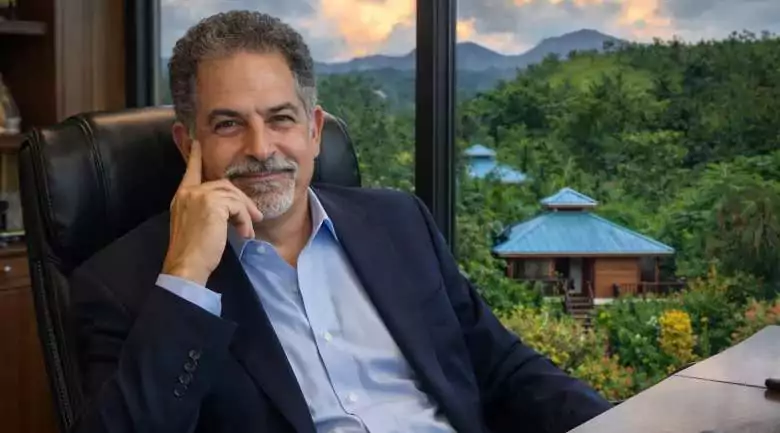
Only weeks after making history as the first Dominican-born and Dominican-residing national elected President-elect of the Caribbean Hotel and Tourism Association (CHTA), Gregor Nassief now finds himself at the center of a growing regional concern after being denied a United States visa.
Nassief, one of the Caribbean’s most respected tourism executives and business leaders, confirmed in an interview with Antigua.news on Thursday that both he and his wife were denied US visas under recently implemented United States immigration policies.
They flew to Barbados as usual to have their US visa’s renewed but were flately denied.
The development has sparked concern throughout the regional tourism industry, with Nassief warning that the implications extend far beyond his personal circumstances and could have serious consequences for Caribbean tourism, regional connectivity, investment promotion, and international representation.
“It’s not just about me,” Nassief said. “This has implications for the entire Caribbean.”
The timing of the denial has raised particular concern given Nassief’s recent election as President-elect of the Caribbean Hotel and Tourism Association during the Caribbean Travel Marketplace in Antigua and Barbuda.
As incoming head of the region’s most influential private-sector tourism organization, Nassief would ordinarily be expected to travel frequently to represent Caribbean tourism interests at conferences, trade missions, airline negotiations, investment forums, and policy discussions—many of which take place in the United States.
The United States remains the Caribbean’s largest tourism source market, accounting for millions of annual visitors and billions of dollars in tourism revenue.
Industry observers note that restricting the movement of senior Caribbean tourism officials could create challenges in maintaining direct engagement with airline executives, tour operators, investors, travel associations, cruise stakeholders, and US policymakers.
Nassief expressed particular concern about potential impacts on regional airlift, a critical issue for Caribbean economies that depend heavily on tourism.
The Caribbean continues to face ongoing challenges in securing adequate air connectivity, route expansion, and competitive airfare pricing. Much of the decision-making surrounding regional airlift involves negotiations with US-based airlines and aviation stakeholders.
Tourism experts warn that if Caribbean leaders are unable to travel freely to participate in these discussions, destinations could find themselves at a disadvantage when competing for new routes, increased seat capacity, and tourism partnerships.
Beyond airlift, the visa denial also raises broader concerns for Caribbean business leaders.
Nassief is not only a tourism executive but also an entrepreneur whose business interests require international travel. The United States remains one of the region’s most important commercial partners, hosting major trade shows, investment conferences, financial meetings, and tourism marketing events throughout the year.
Regional stakeholders fear that similar visa restrictions affecting business leaders, government officials, and tourism executives could complicate efforts to attract investment, strengthen trade relationships, and promote Caribbean destinations abroad.
The issue comes at a particularly sensitive time for Caribbean tourism.
While the industry has experienced strong post-pandemic recovery, destinations continue to grapple with rising operational costs, geopolitical uncertainty, climate-related challenges, workforce shortages, and increasing competition from other global tourism markets.
For many tourism-dependent economies, maintaining strong relationships with US stakeholders is viewed as essential to sustaining growth.
Nassief’s election to the CHTA presidency was widely celebrated across the Caribbean as a milestone achievement for Dominica and the wider Organisation of Eastern Caribbean States (OECS).
His elevation was seen as evidence that smaller Caribbean nations were gaining greater influence within regional tourism leadership and policy discussions.
Now, some tourism stakeholders are questioning whether visa restrictions on senior regional leaders could inadvertently weaken Caribbean representation in some of the industry’s most important international forums.
The situation has also reignited broader conversations about the relationship between the Caribbean and the United States, particularly as regional governments continue to navigate evolving US immigration policies and their unintended consequences on tourism, trade, and diplomacy.
For Nassief, the concern remains larger than any individual inconvenience.
Comments
20 reader responses11aSaidi
1. Inefficient analysis of Nassief and Caribbean info by US Consulate,
2. Limited knowledge of Caribbean info by West Indian diaspora in US, and
3. Limited participation by WI diaspora in US political process
Marie-José Edwards
Anonymous
Me
Anonymous
Anonymous
Wildflower
Anonymous
Simple
Concerned Antiguan
Concerned Antiguan
Anonymous
Trump+
Coral
Adding an apostrophe denotes ownership.
Just Imagine
Informed citizen
Tom
Juju Bee
WHAT does that say for the ordinary man since I’m sure he most certainly can afford the $15,000 US bond. God don’t sleep and Trump not gonna be there forever. Time longer than rope
Daniel Joseph
R.S